

“Fork in the Road: Envisioning Earth’s Future in 2050” presents two divergent global scenarios (blogs) for the year 2050, each illustrating the profound impact of our environmental choices. These scenarios are not just about London but serve as a microcosm for the world at large. The first scenario paints a grim picture of a planet overwhelmed by the consequences of environmental neglect – cities submerged, ecosystems collapsed, and a world grappling with the fallout of climate change. Conversely, the second scenario offers a hopeful vision of a rejuvenated Earth, where proactive environmental stewardship has led to thriving ecosystems, sustainable cities, and a harmonious balance between human progress and nature’s wellbeing. These contrasting futures aim to galvanise a global conversation, encouraging us to critically evaluate our actions and their long-term effects on our planet. It’s a call to action, reminding us that the path we choose today will shape the world of tomorrow…
Which scenario comes true is largely down to the political decision makers; however, I don’t personally believe that gives me immunity from attempting to make a nature positive difference by electing to manage the decisions/choices in my control. Anyway, let’s take a look at the two very different scenarios for our world come 2050:
Blog Post 1: A Cautionary Tale – Earth in 2050

The year 2050 has arrived, and it’s a stark reflection of ignored environmental warnings. Our world, especially evident in the UK, bears the brunt of our past inaction, unfolding in ways that research and experts had long cautioned against.
London Submerged:
London’s struggle against rising sea levels, a direct consequence of climate change as noted in the IPCC Special Report on the Ocean and Cryosphere in a Changing Climate, presents a grim reality. Iconic locations like the Thames Embankment and historic Greenwich are increasingly vulnerable to flooding, a concern highlighted in the UK Environment Agency’s long-term projections. The once-bustling underground stations, now regularly inundated, disrupt daily life, a scenario supported by research in Nature Communications.
Unbearable British Summers:
The UK Met Office had predicted more frequent and intense heatwaves, and by 2050, this has become the norm. British summers now regularly exceed 40°C, leading to public health crises, particularly affecting the elderly, as discussed in The Lancet. Rural areas, especially in East Anglia, face agricultural challenges due to prolonged droughts, aligning with findings from the Royal Society on climate impacts on UK agriculture.
Collapsing Ecosystems:
The decline in native wildlife, such as hedgehogs and red squirrels, mirrors concerns raised in the State of Nature report. The diminishing chorus of birds and loss of pollinators, crucial for agricultural ecosystems, reflect studies published in the Journal of Applied Ecology, demonstrating the cascading effects of biodiversity loss.
Oceans of Despair:
British marine environments mirror the global crisis in our seas. The dramatic decline in North Sea fish populations, noted by the Marine Conservation Society, reflects overfishing and habitat destruction. Coral bleaching, a phenomenon exacerbated by ocean acidification as reported in Science, devastates marine biodiversity, affecting both ecosystems and the fishing and tourism industries.
A Fractured World:
Globally, competition for resources intensifies, a scenario forewarned in the UN World Water Development Report. Climate-induced displacement, as discussed in the Internal Displacement Monitoring Centre reports, leads to increased migration and socio-political tensions.
This 2050 scenario, grounded in research and projections, serves as a stark reminder of the consequences of ignoring environmental warnings. It’s a world shaped by our past choices, underscoring the urgency of action in our present.
Blog Post 2: A Story of Hope – Earth in 2050
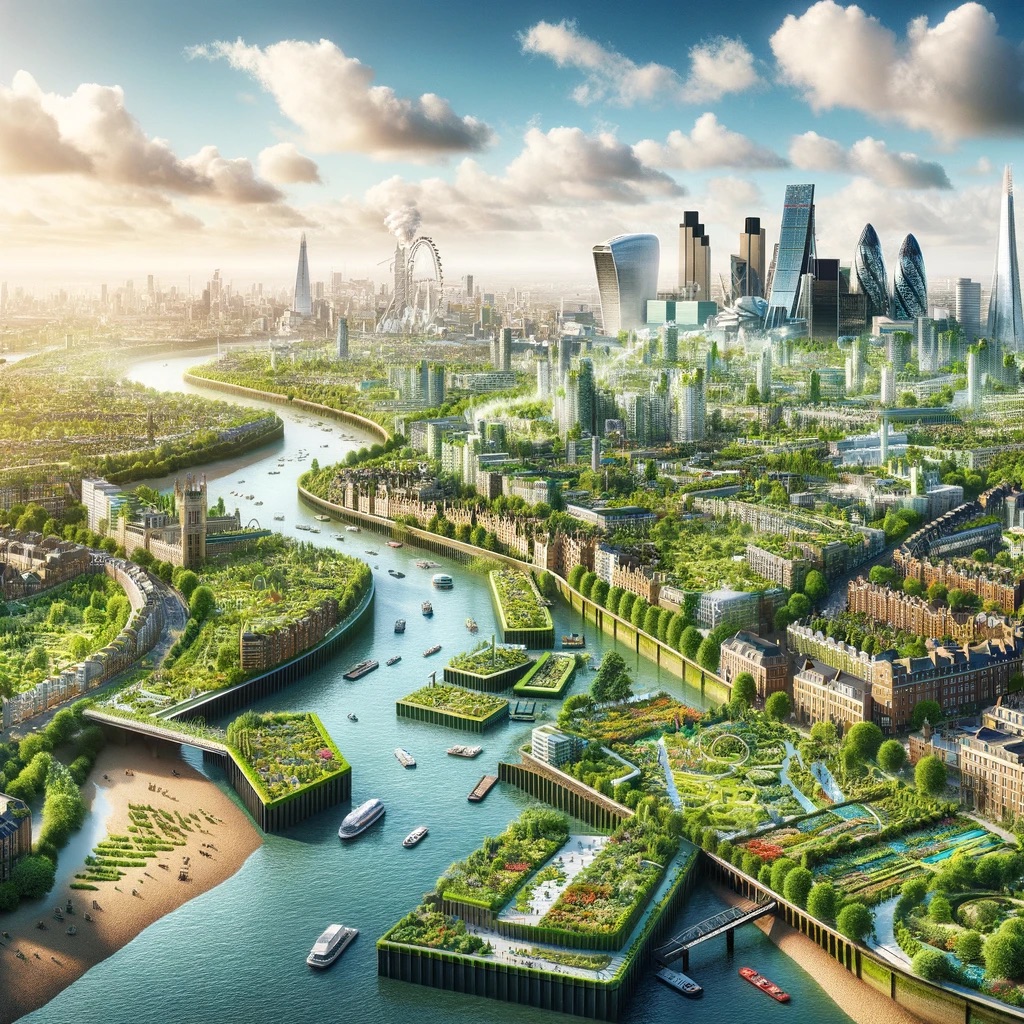
As we step into 2050, we are greeted by a world transformed by our concerted efforts to address environmental challenges. This vision, once a hopeful projection by environmentalists and scientists, is now our reality, particularly evident in the thriving landscapes of the UK.
A Resilient London:
London, a city once at risk of flooding, now exemplifies urban resilience and sustainability. The success of the Thames Barrier’s enhancements and the development of green infrastructure, as envisioned in studies like those by the Greater London Authority on sustainable city planning, have fortified the city. Rooftop gardens and expanded green spaces, a reality supported by the principles in the UK Green Building Council reports, now define the city’s skyline.
Pleasant British Summers:
The UK, having heeded the Met Office’s warnings, now experiences summers that are warmer yet comfortable. Nationwide tree-planting initiatives and sustainable agricultural practices, encouraged by research from the Royal Horticultural Society and DEFRA, have revitalised the countryside and mitigated extreme temperatures, ensuring a balance between human habitation and nature.
Revitalised Ecosystems:
The UK’s commitment to rewilding, inspired by the success stories in the WWF Living Planet Report, has seen the return of flourishing ecosystems. Efforts mirrored in the Wildlife Trusts’ campaigns have led to the resurgence of species like bees and butterflies, vital for pollination and biodiversity.
Reviving Oceans:
Our oceans, once under threat, have been rejuvenated. The UK’s adherence to marine conservation strategies, as outlined in the Marine Conservation Society’s guidelines, has restored fish populations in the North Sea. The revival of coral reefs, echoing the recovery plans discussed in the journal Coral Reefs, showcases a vibrant marine ecosystem.
A United World:
The global community, following pathways laid out in the United Nations Sustainable Development Goals, collaborates effectively in resource management and sustainable development. This cooperation, advocated in reports by the International Union for Conservation of Nature (IUCN), ensures that environmental consciousness is integral to societal progress.
This 2050 scenario, underpinned by rigorous research and proactive measures, stands as a testament to what can be achieved when we unite in our efforts. It’s a world of hope, resilience, and sustainable coexistence, a dream realised through dedication and collaborative action.
Which one will it be..?

