
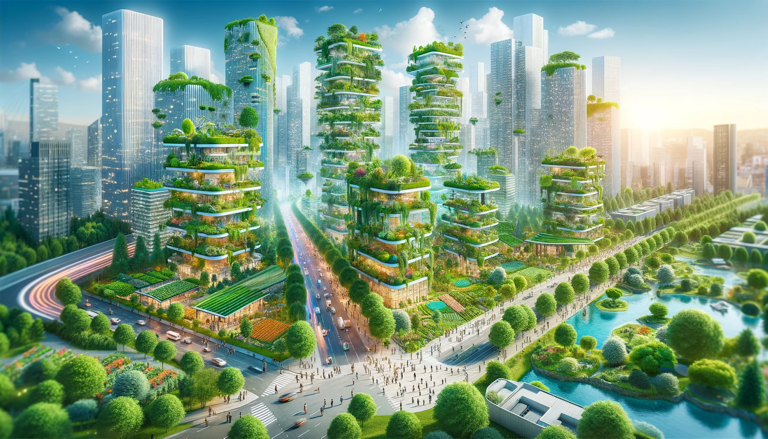
As we imagine our world in 2050, envisioning the future of our urban landscapes is crucial. In a time where concrete jungles have often overshadowed green spaces, a new era is emerging – one where nature and city life intertwine harmoniously. “Seeds of Tomorrow” explores this transformative journey towards greener, more sustainable cities.

The Evolution of Urban Green Spaces:
Historically, urban development often meant the displacement of natural environments. However, as we’ve grown more environmentally conscious, a paradigm shift is occurring. Cities, once grey and lifeless, are gradually turning green. This change isn’t just aesthetic; it’s a vital part of a sustainable future.
Benefits of Urban Greenery:
The advantages of integrating nature into urban settings are manifold:
– Mental Health: Green spaces offer a respite from the urban hustle, reducing stress and improving overall well-being.
– Air Quality: Plants act as natural air filters, absorbing pollutants and producing oxygen.
– Biodiversity: Urban green spaces are havens for wildlife, supporting diverse ecosystems.
– Climate Change Mitigation: Green areas help regulate urban temperatures and play a role in carbon sequestration.
Innovative Urban Green Initiatives:
Around the world, cities are embracing innovative approaches to greenery:
– Vertical Gardens: Utilising building facades for plant life, these gardens beautify cityscapes and improve air quality.
– Rooftop Farms: Transforming unused rooftops into productive agricultural spaces, these farms localise food production and reduce transportation emissions.
– Urban Forests: Large-scale planting of trees in urban areas not only supports biodiversity but also provides recreational spaces for residents.
Community and Policy Engagement:
The success of these green initiatives hinges on community involvement and supportive urban policies. Grassroots movements, public awareness campaigns, and policy reforms are integral to creating and maintaining these green spaces.
Challenges and Solutions:
Urban green development isn’t without challenges. Limited space, funding, and maintenance issues are significant hurdles. Solutions include multi-stakeholder collaboration, innovative funding models like green bonds, and community stewardship programs.
Conclusion:
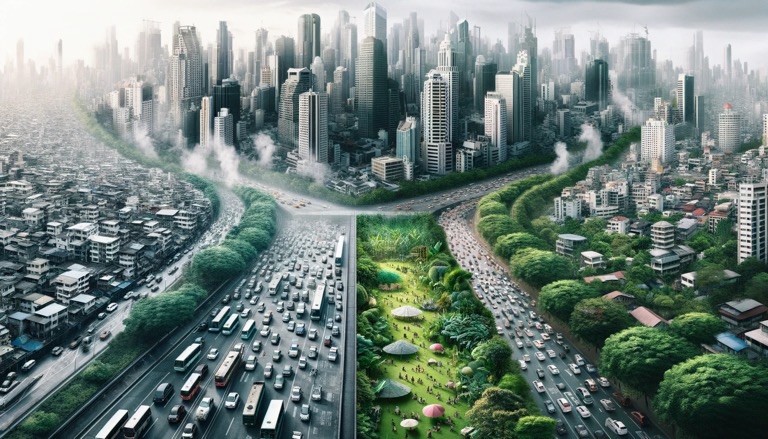
As we look towards 2050, the integration of green spaces into urban areas isn’t just a dream – it’s a necessary evolution. These ‘Seeds of Tomorrow’ are being planted today, paving the way for more resilient, healthier, and sustainable urban environments. In this future, we don’t just coexist with nature; we thrive alongside it, creating a green legacy for generations to come.
A few more thoughts…
Thank you for reading “Seeds of Tomorrow: The Rise of Urban Green Spaces in 2050.” If you’re inspired by the vision of greener cities and sustainable living, please share this post and join the conversation on making our urban spaces thrive. Together, we can cultivate a greener, brighter future. 🌱🏙️💚

