

A Lesson from Martin Woods, Former Head Gardener to the Royal Family
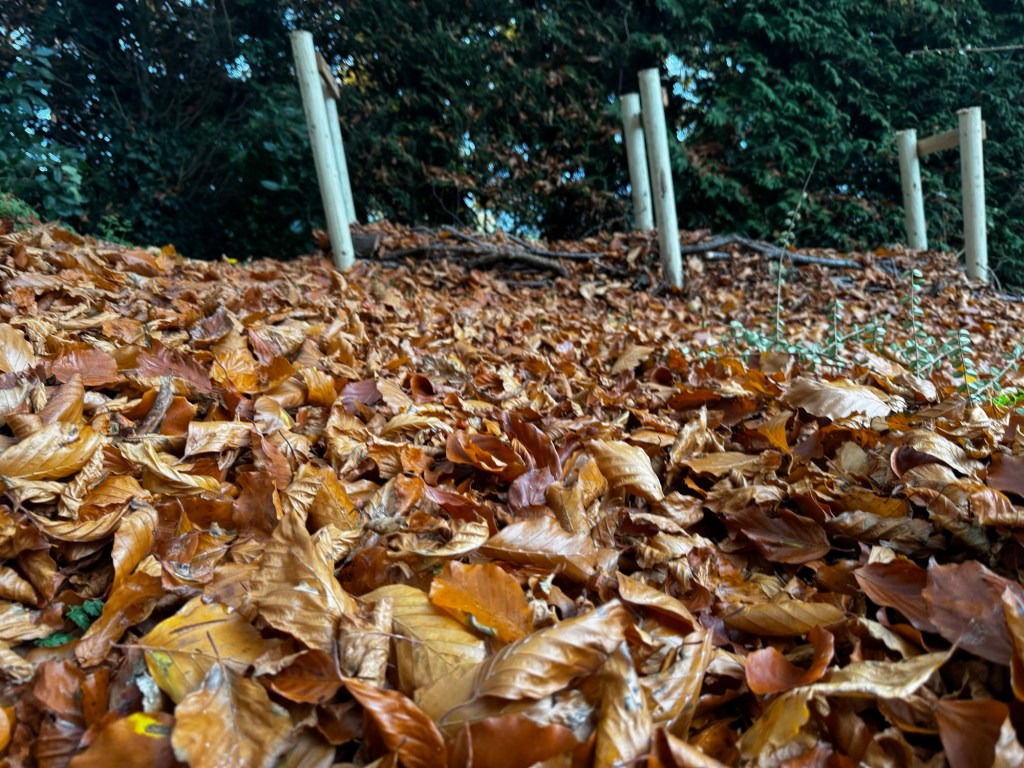
As autumn rolls in and our gardens fill with leaves, the urge to tidy up kicks in. This year, I’m holding back on the rake. My decision was inspired by a recent chat with Martin Woods. He is the former Head Gardener to the Royal Family. Martin shared a piece of advice that’s as simple as it is powerful: let the leaves lie. He said this small shift will greatly help our gardens. It will also help the creatures that depend on them. If that philosophy is good enough for the Royal Family, it’s good enough for my garden.
“Letting the leaves lie isn’t just about saving time,” Martin told me. “It’s about giving back to nature.” And he’s right. Those fallen leaves aren’t just debris; they’re a natural mulch, packed with nutrients. When left where they fall (or blown/raked to a suitable resting place), they protect the soil. They keep in moisture. They create a habitat for insects that will spend the winter nestled under them. These insects become a vital food source for birds and other wildlife, turning an untidy corner into a bustling ecosystem.
That sounds like a win/win to me.
Why Leave the Leaves?
🍂 Natural Nourishment: As leaves break down, they release nutrients back into the soil. This process keeps the soil healthy without needing artificial fertilisers.
🍂 Moisture Retention: The weather is growing more unpredictable. A layer of leaves helps the soil hold onto moisture. This benefits plants and supports stronger roots.
🍂 Boosts Biodiversity: Leaves offer a cosy shelter for insects and pollinators. They support the food chain. This helps maintain a balanced ecosystem in your own garden.
This approach isn’t just a gardening trend; it’s a solution people are turning to around the world. In Andalusia, for instance, olive farmers are returning leaves and pruning remnants to their fields. They use this natural cover to protect the soil. It also helps to keep in moisture. Similarly, vineyards in France are adopting the same approach to cope with a changing climate. These farmers have realised that leaving organic matter on the ground helps the land stay resilient as weather extremes increase.
Join the #LearningToLetTheLeavesLie Movement
This autumn, I invite you to try leaving the leaves where they fall. That’s what I’m doing. This one choice can make a meaningful difference to soil health. It also boosts biodiversity, even if it’s just a small patch of garden.
If you’re up for it, share your photos and stories with the hashtag #LearningToLetTheLeavesLie. Let’s see what happens when we all take a step back and let nature do its thing. Together, we can support not only our gardens but also the small creatures that keep our ecosystems going.
Now put that rake and bin bag away, and let those leaves lie!
Simon
#LeaveTheLeaves #GardenForNature #MartinWoodsInspires #SustainableGardening #SoilHealth #BiodiversityBoost #NaturePositive #AutumnWisdom
Let me know what you think to this as an idea…?


9 responses to “Learning to Let the Leaves Lie”
That Martin knows his onions!
Great post. Thank you
LikeLike
He sure does!
LikeLike
Good advice. Rob
LikeLiked by 1 person
This is excellent advice. Thank you.
Maxwell Knight would approve – and so also, we suspect, would Charles Darwin – see his 1881 book
about earthworms:
“The Formation of Vegetable Mould Through the Action of Worms, with Observations on their Habits”
John and Margaret Cooper
LikeLiked by 2 people
Excellent quote!
Thank you.
Simon
LikeLike
Currently much of my garden looks leaf-shrouded, from lilac and the big oak leaves (from a small oak tree) and rose and various bushy-shrub leaves. I hope these autumn coloured discards will mulch down enough during the winter that new spring leaves of small perennials will be visible again, eg. cyclamen, crocuses, and dwarf daffodils. So far huge green nasturtium leaves are towering over them all.
LikeLiked by 1 person
Let’s keep our fingers crossed the leaves mulch down – it’s in nature’s hands now. Best wishes. Simon
LikeLike
Dear Simon, so much is !! – and all year too. Glad to say the grass and dandelion are not covered, so favourite garden treats for guinea pigs always available.
John assured me last Wednesday at Fitzwilliam College, where he and Margaret gave their super presentation about veterinary practice, that Guinea pigs are indeed “Exotics”. Well I think mine are anyway !
Very best wishes,
Valerie
LikeLiked by 1 person
Hello, Valerie – if Prof. Cooper says they’re ‘Exotics’ – who am I to argue! I’ve blown my leaves off the lawn and I to the borders, where they seem to be content. I’m a letting the leaves lie convert. So much so, I recorded a podcast session about it https://podcasts.apple.com/gb/podcast/naturespace-with-haiths/id1647803257?i=1000677099304
Best wishes
Simon
LikeLike