
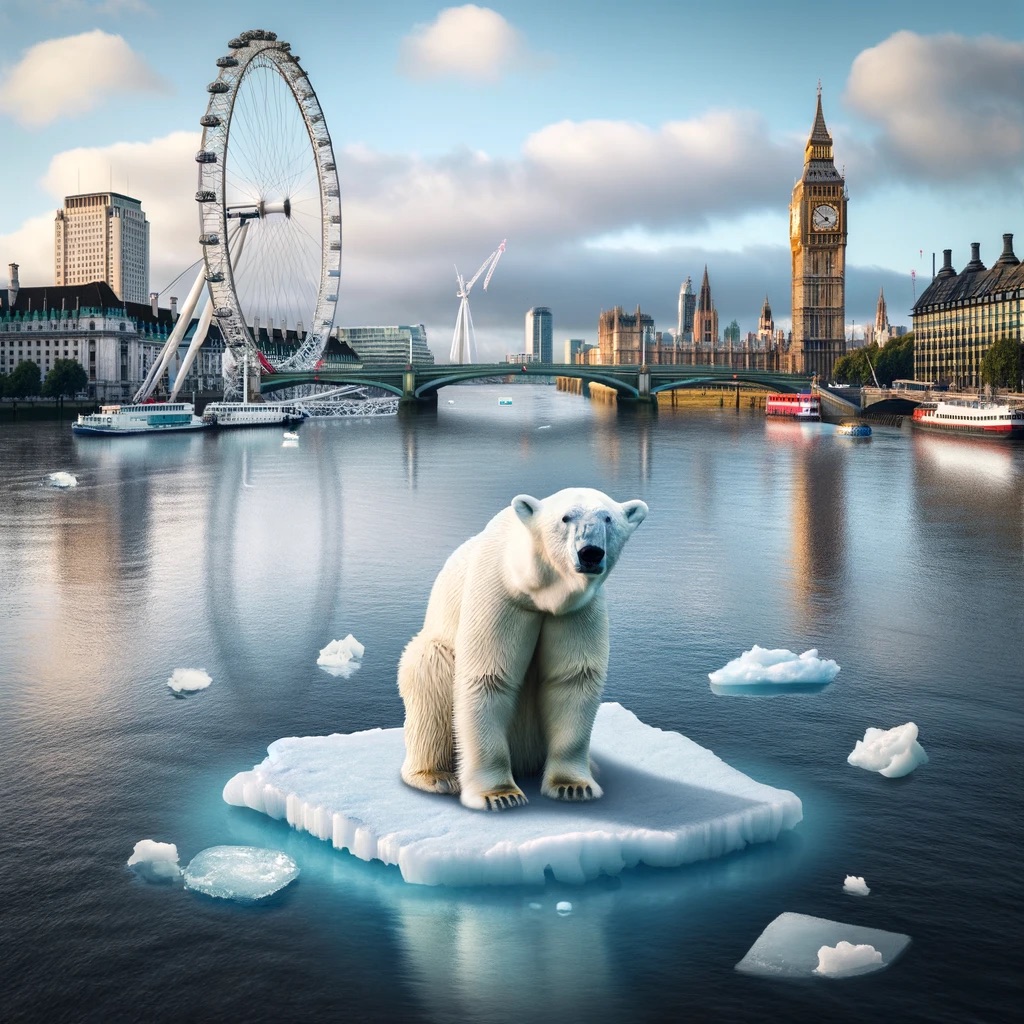
As we continue to explore the enduring legacy of Maxwell Knight, it becomes increasingly apparent that his early environmental warnings were not merely historical observations, but prophetic insights into our current climate crisis. Today, our focus shifts to the stark reality of this emergency, as seen through the lens of nature, and its resonance with Knight’s foresight.
According to the WWF Living Planet Report 2022, there has been a staggering 69% decline in global wildlife populations since 1970
State of Nature, 2022

The climate crisis we face today is a multifaceted and intricate issue, comprising rising global temperatures, extreme weather events, melting ice caps, and a harrowing loss of biodiversity. According to the WWF Living Planet Report 2022, there has been a staggering 69% decline in global wildlife populations since 1970, starkly illustrating the profound impact human activities have on the planet. This alarming statistic echoes Knight’s early predictions in “The Frightened Face of Nature,” where he foresaw the consequences of humanity’s disregard for nature and warned of a potential reverse in evolution.
What exactly is biodiversity?
Biodiversity refers to the variety and variability of life on Earth. It encompasses the range of ecosystems, species, and genetic differences within these species. Biodiversity is vital for several reasons:
1. Ecosystem Stability and Resilience: Diverse ecosystems are more resilient and able to withstand environmental stresses like climate change or pollution. A greater variety of species means that ecosystems can recover more quickly from disturbances.
2. Human Well-being: Biodiversity is crucial for human survival and quality of life. It provides a wide range of ecosystem services including food, clean water, medicine, and pollination of crops.
3. Genetic Resources: Biodiversity is a source of immense genetic material which can be crucial in breeding programs for crops, livestock, and even in medical research.
4. Cultural and Aesthetic Value: Biodiversity contributes to the cultural and aesthetic richness of human life. Many societies place spiritual, artistic, and intrinsic value on the natural world.
5. Economic Value: Many industries such as agriculture, pharmaceuticals, and tourism heavily rely on biodiversity.
The loss of biodiversity is of grave concern because it can lead to the breakdown of ecosystems and the services they provide. This loss is often irreversible and can result in a cascade of negative effects, including:
– Reduced Food Security: The loss of pollinators and genetic diversity in crops can threaten food supply.
– Vulnerability to Climate Change: Reduced biodiversity makes ecosystems less resilient to changes in climate.
– Loss of Medicinal Resources: Many medicines are derived from plants and animals; their loss could hamper medical advancements.
– Economic Impacts: Industries that rely on biodiversity could suffer significant economic losses.
– Reduced Quality of Life: The loss of biodiversity can impact recreational activities, cultural traditions, and overall well-being.
Overall, biodiversity is essential for the sustainability of life on Earth, and its loss poses significant risks to the environment, human health, and economies.
Various sources.
Knight’s concerns, articulated in a less environmentally aware era, align with decades of scientific research, including the dire warnings of the Intergovernmental Panel on Climate Change (IPCC). These reports underscore the urgency of addressing climate change, emphasising a shift from exploitation to stewardship of the natural world.
…the rapid pace of climate change is outstripping nature’s ability to adapt.
FFON.

However, the discourse on climate change often becomes mired in debates over its authenticity, with some viewing it as a conspiracy. This detracts from a crucial aspect of the crisis: the rapid pace of climate change is outstripping nature’s ability to adapt. Charles Darwin’s theory of evolution and natural selection, a cornerstone of modern biology, posits that evolutionary change is a slow process, occurring over millions of years. The current accelerated pace of climate change does not afford nature the luxury of time to adapt and evolve, leading to unprecedented and catastrophic impacts on ecosystems and biodiversity.
In other words, from nature’s perspective, the climate crisis is not a matter of debate but a stark reality of disrupted ecosystems, threatened habitats, and struggling species. The rapid changes we are witnessing, from shifting weather patterns to altered landscapes, are overwhelming the natural world’s capacity to cope and adapt.
As we reflect on Knight’s foresight, we’re reminded of the urgency of our situation. His call to recognise and rectify our disconnect with nature is more relevant than ever.
It’s not all doom and gloom, though; in the coming days, weeks and months, we’ll explore successful conservation efforts that offer hope and a pathway forward in this crisis. Join us as we continue to draw lessons from the past to inform our actions in the present, uniting Knight’s vision with our fight against the climate crisis and honouring the legacy of Darwin’s profound understanding of nature.
- Feeding birds isn’t the problem. How we feed them is what matters.

- Happy Easter
- The Spy Who Loved Nature talk
- I’ve written a book.
- A Life with Nature – Wild and Tame.


2 responses to “The Climate Crisis: Through Nature’s Eyes and Echoing Maxwell Knight.”
Yes Simon there are real and on going environment problems to do with pollution, land change and general disregard to nature contributing to these concerns. However myself and others have problems with the concept of climate crisis, climate emergency particularly the idea of CO2 greenhouse gas emissions. In the spirit of skeptic thinking we can point to 1600 scientist and others who have signed a declaration disputing the climate crisis position.
https://www.thecollegefix.com/more-than-1600-scientists-and-other-scholars-sign-no-climate-emergency-declaration/
For more detail regarding the above Dr P Moore former Green peace founder sets out this position.
https://www.bitchute.com/video/LgZd4HXZLrUn/
Rob
LikeLike
Hello Rob,
Thank you for sharing your thoughts and providing these resources. We appreciate the spirit of skepticism and the importance of diverse perspectives in any scientific discourse. Engaging with varying viewpoints is crucial for a comprehensive understanding of complex issues like climate change.
The declaration you mentioned reflects a minority perspective in the scientific community. It’s important to recognise that the overwhelming consensus among climate scientists worldwide is that climate change is real, primarily driven by human activities, and poses a significant threat to ecosystems and human societies. This consensus is supported by extensive research and data collected over decades, as represented by major scientific bodies like the Intergovernmental Panel on Climate Change (IPCC) and the National Aeronautics and Space Administration (NASA).
Regarding CO2 and greenhouse gases, there is substantial evidence showing that their increased concentrations in the atmosphere are leading to global warming and climate change. These findings are based on a vast array of data, including atmospheric measurements, ice core samples, and climate modelling.
Dr. Patrick Moore’s position, as a former member of Greenpeace, is indeed a point of interest. However, it’s worth noting that his views on climate change have been widely disputed by many climate scientists and environmentalists. While it’s essential to consider various viewpoints, it’s equally crucial to critically evaluate the sources and the scientific validity of the arguments presented.
In addressing environmental issues on this blog, our goal is to provide information based on the broad scientific consensus, while also acknowledging and exploring different viewpoints. We believe in a balanced approach that considers the weight of scientific evidence and the potential risks associated with climate change.
We encourage our readers to explore a range of sources, engage in critical thinking, and participate in informed discussions on these vital topics. Thank you again for your input, as it contributes to a richer and more nuanced conversation.
Best regards,
Simon
LikeLike